Lifelong learning trends are reshaping how we think about education, emphasizing that learning isn’t confined to the classroom or a specific age. As the world rapidly changes, the need for continuous skill development and knowledge acquisition becomes more crucial than ever.
From online courses to immersive learning technologies, innovative platforms are emerging that make education accessible and engaging for everyone. This evolution not only enhances personal growth but also equips individuals with the skills necessary to thrive in an increasingly competitive job market.
Emerging Lifelong Learning Trends
Lifelong learning is evolving rapidly, shaped by various factors including technological advancements, societal needs, and shifts in the job market. As individuals seek to enhance their skills and knowledge throughout their lives, new trends are emerging that redefine how education is delivered and experienced. This discussion highlights the latest trends in lifelong learning, emphasizing the role of technology and innovative platforms transforming the educational landscape.
Latest Trends in Lifelong Learning
Several key trends are influencing the landscape of lifelong learning, reflecting how learners engage with education today. These trends include personalized learning, microcredentialing, and the rise of communities of practice. Each of these trends plays a crucial role in making learning more accessible and relevant to diverse learners.
Technology’s Role in Shaping Lifelong Learning
Technology is at the forefront of transforming lifelong learning experiences, enabling more flexible and interactive educational opportunities. Advances like artificial intelligence and machine learning are facilitating personalized learning paths, making it possible for individuals to tailor their educational experiences to their unique needs and goals.
“Technology is not just a tool; it is a catalyst for change in lifelong learning.”
The integration of digital tools, such as online courses and mobile learning applications, allows learners to access resources anytime, anywhere. This flexibility supports a culture of continuous learning, essential in today’s dynamic job market. Additionally, social media and online communities foster collaborative learning environments, where learners can share knowledge and resources.
Innovative Lifelong Learning Platforms
Numerous innovative platforms are emerging, significantly impacting how education is accessed and delivered. These platforms are designed to cater to diverse learning styles and preferences, enhancing engagement and retention of information.
- Coursera: This platform partners with top universities and organizations to offer a wide range of courses. Its microcredentialing system allows learners to earn recognized certificates that enhance their professional profiles.
- edX: Similar to Coursera, edX provides open online courses from prestigious institutions, allowing learners to access quality education from anywhere in the world. Its emphasis on self-paced learning caters to individuals’ varied schedules.
- LinkedIn Learning: Leveraging the professional network’s reach, LinkedIn Learning offers courses tailored to skills in demand within the workforce. This platform enables users to enhance their employability through targeted learning experiences.
These platforms exemplify the shift towards accessible, quality education, emphasizing skill development and practical application in real-world contexts, which is vital for lifelong learners aiming to stay competitive in an ever-changing job market.
Role of Education in Lifelong Learning
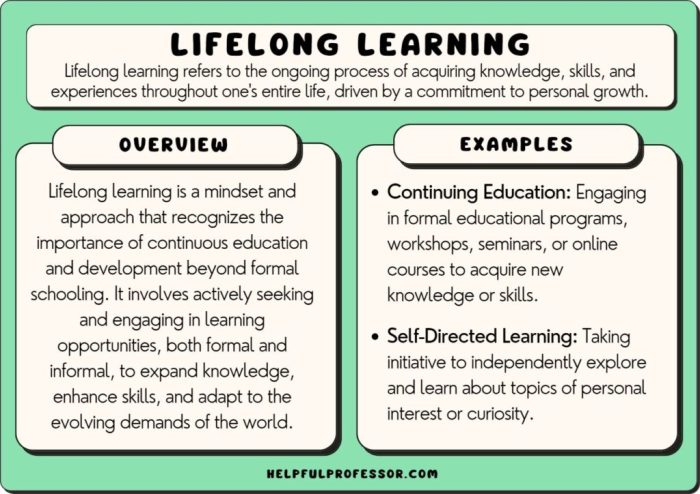
Education serves as the backbone of lifelong learning, providing the foundational knowledge and skills required for continuous personal and professional development. Both formal and informal education systems play vital roles in nurturing a culture of learning that adapts to the evolving demands of society. Through various educational avenues, individuals can cultivate a mindset geared towards perpetual growth and adaptation, essential in a rapidly changing world.Formal education, typically structured and credentialed, equips learners with essential skills and knowledge that are often recognized and valued in the job market.
Informal education, on the other hand, encompasses self-directed learning, mentorship, and community-based initiatives, enabling individuals to acquire and enhance their skills outside traditional settings. This dual approach not only facilitates ongoing skill development but also aids in the preservation of knowledge and competencies in various fields.
Essential Skills for Effective Lifelong Learning
In the realm of lifelong learning, certain skills are fundamental to ensuring that individuals can navigate their educational journeys effectively. Recognizing and developing these skills can significantly enhance one’s ability to learn continuously and adapt to new challenges.The following skills are crucial for effective lifelong learning:
- Critical Thinking: This skill allows individuals to analyze information, evaluate sources, and make informed decisions, which is essential in processing new knowledge.
- Self-Motivation: Being driven to learn independently helps sustain engagement in educational activities, particularly in informal contexts.
- Time Management: Efficiently managing time enables learners to balance education with other life responsibilities, ensuring that learning remains a priority.
- Adaptability: This involves being open to change and willing to adjust learning strategies in response to new information or environments.
- Effective Communication: The ability to articulate thoughts clearly enhances collaboration and knowledge sharing, crucial in both formal and informal learning settings.
- Digital Literacy: Proficiency in technology and online tools expands access to learning resources and opportunities in today’s digital landscape.
These skills not only bolster individual learning experiences but also foster a community of learners who can support each other in their pursuit of knowledge. As the landscape of work and education evolves, possessing these competencies will be increasingly important in maintaining relevance and effectiveness in personal and professional growth.
“Education is the most powerful weapon which you can use to change the world.” – Nelson Mandela
Challenges and Opportunities in Lifelong Learning
The journey of lifelong learning is not without its hurdles. Individuals often encounter various barriers that hinder their pursuit of ongoing education. Understanding these challenges is crucial for fostering an environment where continuous learning can thrive. In addition to recognizing these obstacles, exploring the opportunities that arise from them can lead to effective strategies for engagement in learning.
Barriers to Lifelong Learning
Numerous obstacles can impede individuals from engaging in lifelong learning. Common barriers include time constraints, financial limitations, lack of access to resources, and insufficient motivation. Each of these factors plays a significant role in shaping an individual’s ability to pursue educational opportunities.
- Time Constraints: Many individuals juggle family responsibilities, work commitments, and personal obligations, leaving little time for learning.
- Financial Limitations: The cost of education can be a significant barrier, especially for those pursuing further studies while managing existing expenses.
- Lack of Access to Resources: In some regions, educational resources may be scarce, limiting opportunities for skill development and knowledge acquisition.
- Insufficient Motivation: A lack of clear goals or support can diminish motivation, making it challenging to initiate or sustain the learning process.
Strategies for Overcoming Educational Challenges
To effectively navigate the barriers associated with lifelong learning, individuals can employ several strategies. These approaches can enhance engagement and make learning more accessible.
- Time Management: Prioritizing learning by setting aside dedicated time each week can help integrate education into daily routines.
- Utilizing Free Resources: The internet offers a wealth of free courses, webinars, and educational materials that can help offset financial constraints.
- Community Learning: Engaging with local community centers or groups can provide valuable networking opportunities and access to shared resources.
- Setting Clear Goals: Defining personal learning objectives can bolster motivation and provide a roadmap for progress.
Comparison of Traditional and Modern Approaches to Lifelong Learning
Traditional education methods often rely on structured classroom environments, formal assessments, and a standardized curriculum. In contrast, modern approaches to lifelong learning emphasize flexibility, accessibility, and personalized learning experiences.
- Flexibility: Modern methods, such as online courses and mobile learning, allow learners to engage at their own pace, accommodating diverse schedules and lifestyles.
- Accessibility: With the advent of technology, individuals can access a plethora of learning materials from anywhere, breaking geographical barriers.
- Personalized Learning: Modern approaches often leverage adaptive learning technologies that cater to individual learning styles and needs, enhancing effectiveness.
Modern lifelong learning methods have proven to be effective in increasing participation rates, particularly among adult learners who require flexibility in their education.
Conclusive Thoughts
In summary, the landscape of lifelong learning is expanding, driven by technological advancements and a growing recognition of its importance. By understanding the latest trends and addressing the challenges, we can create a more inclusive and effective educational environment that fosters ongoing growth and development.
Commonly Asked Questions
What are the benefits of lifelong learning?
Lifelong learning enhances personal and professional development, improves adaptability, and fosters a growth mindset.
How can technology aid in lifelong learning?
Technology provides access to diverse resources, allows for flexible learning schedules, and facilitates interactive experiences.
What skills are essential for effective lifelong learning?
Critical thinking, adaptability, self-motivation, and digital literacy are key skills that support lifelong learning.
How do traditional and modern learning methods compare?
Modern methods often emphasize personalized learning and technology integration, while traditional methods focus on standardized curricula and classroom settings.
What challenges do individuals face in lifelong learning?
Common challenges include time constraints, financial limitations, and lack of motivation or resources.


