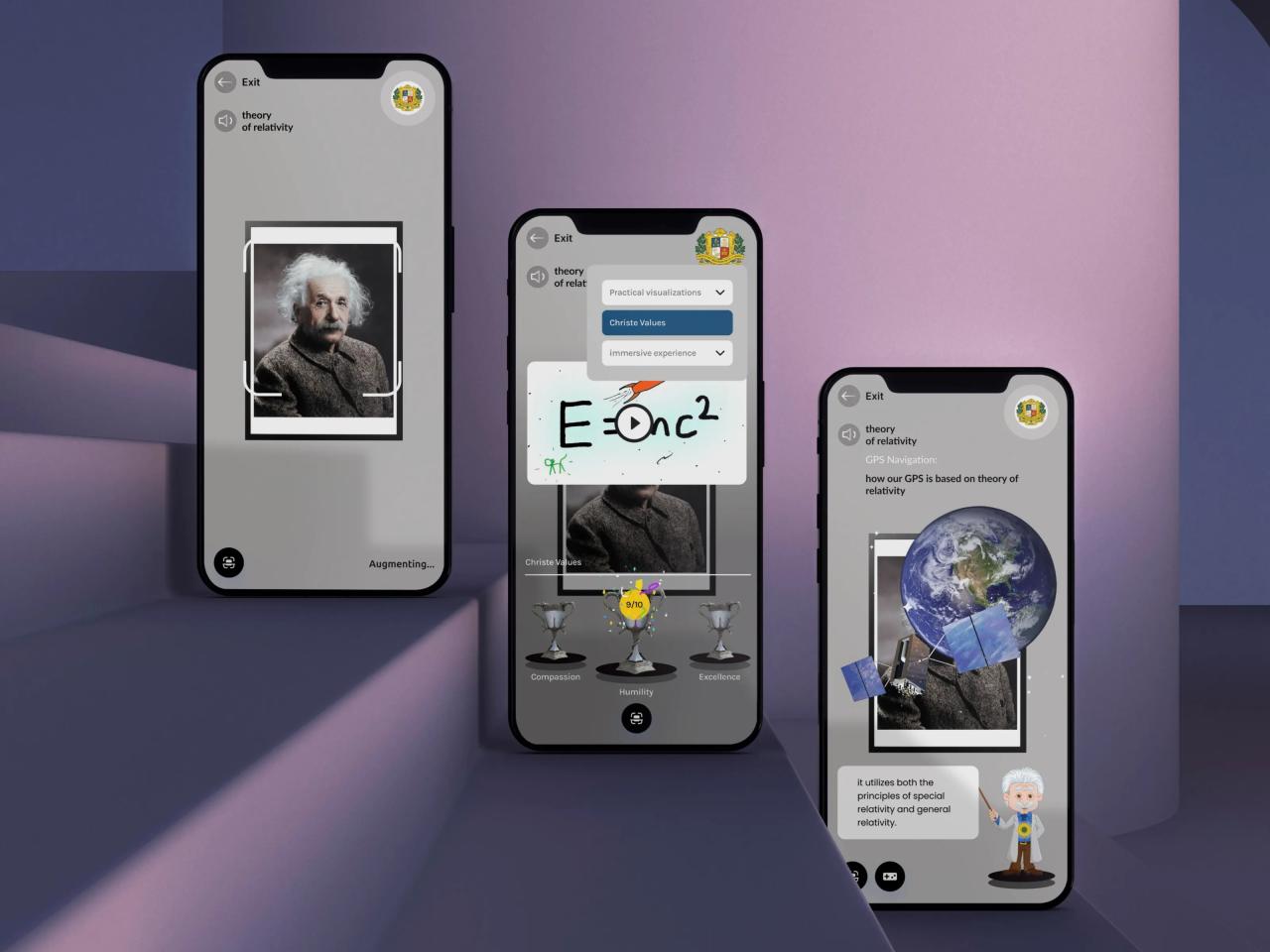
Augmented reality learning apps are revolutionizing the way students engage with educational content, merging the digital and physical worlds to create immersive experiences. These innovative tools not only captivate learners’ attention but also enhance their understanding through interactive elements that traditional methods often lack.
By integrating augmented reality into education, learners can visualize complex concepts, participate in virtual simulations, and collaborate in ways that foster deeper comprehension. This technology is becoming an essential part of modern classrooms, bringing lessons to life and making learning more accessible and enjoyable.
Introduction to Augmented Reality Learning Apps

Augmented reality (AR) is a transformative technology that overlays digital information onto the real world, enhancing the way we perceive our environment. In the realm of education, AR learning apps revolutionize traditional teaching methods by providing immersive experiences that facilitate deeper understanding and engagement among students. As learners interact with their surroundings through AR, they are able to visualize complex concepts in a more tangible way.The application of augmented reality in educational settings brings numerous benefits.
It caters to diverse learning styles, enabling visual, auditory, and kinesthetic learners to grasp content more effectively. By integrating interactive elements into lessons, AR apps foster a more engaging learning environment that keeps students motivated and curious. Moreover, these applications can help bridge gaps in understanding by allowing learners to see and manipulate 3D models, making abstract concepts more concrete and understandable.
Enhancing Student Engagement and Understanding
Augmented reality has the potential to significantly enhance student engagement and understanding through various interactive applications. By immersing students in learning experiences that are both fun and educational, AR fosters a love for learning that goes beyond textbooks. The following examples illustrate how AR can create compelling learning experiences:
1. 3D Visualizations
AR apps can project lifelike 3D models of historical artifacts, human anatomy, or scientific phenomena directly into the classroom environment. For instance, when studying the solar system, students can visualize planets orbiting around the sun, enhancing their spatial understanding of astronomical concepts.
2. Interactive Simulations
AR can facilitate hands-on learning through simulations that allow students to conduct experiments in a safe, virtual environment. For example, chemistry students can mix virtual chemicals and observe reactions without any real-world risks, promoting experimentation and discovery.
3. Gamified Learning Experiences
Many AR apps incorporate game elements to motivate students. For example, an AR scavenger hunt can lead students to explore their surroundings while solving educational puzzles related to their curriculum, thereby combining physical activity with learning.
4. Historical Reconstructions
AR can transport students back in time by overlaying historical events onto modern-day locations. For example, history students can use AR apps to see what a battlefield looked like during a significant war, providing context and enhancing their understanding of historical events.The integration of augmented reality into learning not only makes education more interactive and enjoyable but also fosters critical thinking and problem-solving skills.
By engaging with content in new and exciting ways, students are more likely to retain information and develop a lifelong love for learning.
Popular Augmented Reality Learning Apps
Augmented reality (AR) has significantly transformed the educational landscape by providing immersive learning experiences. By merging digital content with the real world, AR learning apps engage students in ways that traditional methods cannot. This segment explores three popular AR learning apps that are making waves in educational environments.
Overview of Popular AR Learning Apps
Several AR learning apps stand out in the current market due to their innovative features and engaging content. Below are three notable examples that have garnered attention for their effectiveness in enhancing educational outcomes.
- Merge Cube: The Merge Cube allows students to hold and interact with 3D objects using their smartphones or tablets. It turns any flat surface into a dynamic 3D learning environment, making complex subjects like anatomy and physics more accessible. The app offers various educational experiences, including interactive lessons and games designed to boost understanding.
- Google Expeditions: Google Expeditions offers virtual field trips and 3D models that students can explore in augmented reality. Teachers can lead guided tours through historical landmarks, natural wonders, or even the human body, fostering a sense of exploration and curiosity. The app’s capabilities encourage collaborative learning and make abstract concepts tangible.
- Quiver: Quiver brings coloring pages to life by allowing students to color them in and then view their creations in 3D using a smartphone camera. This app promotes creativity and engagement by transforming a simple coloring activity into a captivating learning experience. Quiver also includes educational content that complements various subjects, allowing for seamless integration into the curriculum.
Comparative Features and Benefits
To better understand the strengths of these applications, the following table summarizes their key features and benefits.
| App Name | Key Features | Benefits |
|---|---|---|
| Merge Cube |
|
|
| Google Expeditions |
|
|
| Quiver |
|
|
AR learning apps like Merge Cube, Google Expeditions, and Quiver illustrate the potential of augmented reality to create immersive educational experiences that captivate and motivate students.
The Impact of Augmented Reality on Learning Outcomes
Augmented Reality (AR) offers transformative potential in education by enhancing the way students engage with and comprehend complex subjects. Unlike traditional learning methods, AR facilitates interactive experiences that cater to various learning styles, ultimately improving retention and comprehension. By integrating digital information with the real world, AR can create immersive educational experiences that captivate learners’ attention and foster deeper understanding.AR enhances learning retention and comprehension through interactive simulations and visualizations that make abstract concepts tangible.
For instance, when students experience a 3D model of the solar system through AR, they can visualize distances, sizes, and rotations in a way that is far more impactful than static images or diagrams. This multisensory engagement not only aids in memorization but also in the ability to apply knowledge in real-world scenarios. Research shows that students using AR technology in their learning processes demonstrate significantly higher retention rates compared to those who do not.
Methods for Integrating Augmented Reality into Existing Curricula
Effective integration of AR into existing curricula requires a strategic approach to ensure that it complements traditional teaching methodologies. The following methods illustrate how to seamlessly embed AR into educational frameworks:
1. Curriculum Alignment
Educators should identify specific learning objectives that AR can address, ensuring that the technology enhances the intended outcomes rather than distracts from them.
2. Teacher Training
Providing professional development for teachers equips them with the skills necessary to utilize AR tools effectively. This involves understanding the technology, troubleshooting common issues, and integrating AR content into lesson plans.
3. Collaboration with AR Developers
Partnering with AR content creators can lead to tailor-made resources that specifically meet curricular needs, making learning more relevant and engaging for students.
4. Pilot Programs
Implementing AR in small-scale pilot projects allows educators to assess its effectiveness and gather feedback from students. This iterative process helps refine the use of AR and demonstrates its impact before broader rollout.
“Students using AR technology in their learning processes demonstrate significantly higher retention rates compared to those who do not.”
Case Studies and Statistics on Augmented Reality’s Positive Effects
Several studies and case examples highlight the substantial benefits of AR in education. For instance, a case study conducted in a high school biology class found that students using AR to explore cellular structures scored, on average, 30% higher on assessments than those taught via traditional methods. Furthermore, a survey indicated that 85% of students felt more engaged during lessons that incorporated AR elements.Statistics from a study published in the Journal of Educational Technology & Society revealed that students who engaged with AR learning modules exhibited a 70% increase in knowledge retention over a six-month period compared to control groups.
These findings underscore the efficacy of AR as a powerful educational tool, capable of transforming learning experiences and outcomes in diverse subject areas. The positive reception of AR in educational settings illustrates its potential to bridge gaps in understanding, stimulate curiosity, and foster a more interactive learning environment. As technology continues to evolve, so too does the opportunity for AR to redefine educational landscapes.
End of Discussion
In conclusion, augmented reality learning apps are not just a passing trend; they represent a significant advancement in educational methodologies. As more educators recognize the benefits of integrating such technology into their teaching practices, we can expect to see further improvements in student engagement and academic performance. The future of learning is undoubtedly augmented, and the possibilities are endless.
Questions Often Asked
What devices are required for augmented reality learning apps?
Most augmented reality learning apps can be used on smartphones and tablets equipped with a camera and internet access, while some may require specific hardware such as VR headsets.
Are augmented reality learning apps suitable for all age groups?
Yes, there are augmented reality learning apps designed for various age groups, from early childhood education to higher education, catering to different learning needs.
Can augmented reality apps replace traditional teaching methods?
While augmented reality apps enhance learning experiences, they are meant to complement traditional teaching methods rather than replace them, offering a blended approach to education.
How do I choose the right augmented reality learning app?
Consider factors such as age appropriateness, curriculum alignment, user reviews, and the specific features that suit your educational goals when selecting an app.
Are there any drawbacks to using augmented reality in education?
Some potential drawbacks include the need for reliable technology, the learning curve for both students and teachers, and the possibility of distractions if not implemented thoughtfully.


